Deutsch
 English
 français
 русский
 italiano
 español
 português
 Nederlands
 العربية
 Türkçe
 Polski
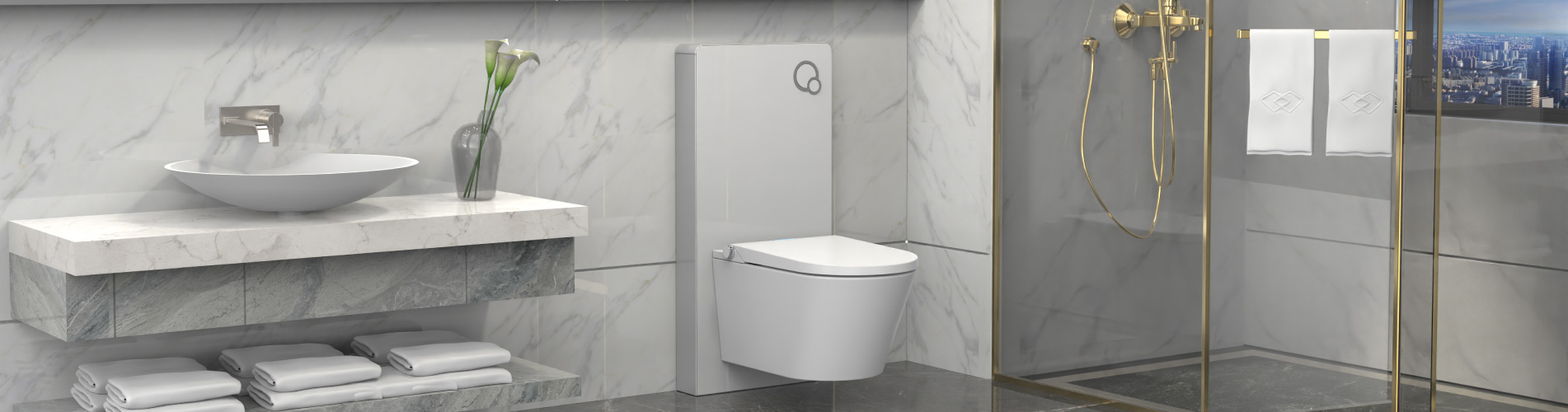
1. Introduction
European bathroom design has long prioritized minimalism, hygiene, energy efficiency, and user comfort. In recent years, smart toilets have gradually replaced traditional ceramic toilets and ordinary bidets, becoming a mainstream upgrade for modern residential, boutique hotel, and high-end commercial bathrooms across the UK, Germany, France, and other European countries. Unlike conventional toilets that only provide basic flushing functions, a smart toilet is an integrated high-tech bathroom fixture that combines sensor technology, electronic control systems, water purification, and constant-temperature heating modules. It completely subverts the traditional toilet usage mode and solves the pain points of poor hygiene, single function, and low comfort of traditional toilets.
For most European consumers who are new to smart bathroom equipment, two core questions remain: what exactly is a smart toilet, and how does it work in daily use? This guide will elaborate on the definition, core components, working principles, mainstream functions, and European market adaptation advantages of smart toilets, helping you fully understand this practical and eco-friendly bathroom innovation.
2. What Is a Smart Toilet?
A smart toilet, also known as an intelligent toilet or electronic bidet toilet, is an upgraded sanitary ware that integrates traditional toilet flushing structure with intelligent electronic systems. Tailored to European market standards, qualified smart toilets comply with EU water-saving regulations, electrical safety norms, and minimalist space design requirements. It is not a simple combination of toilet and bidet, but an all-in-one bathroom device that realizes automatic induction, personalized cleaning, constant-temperature comfort, self-cleaning and sterilization, and energy-saving flushing through intelligent sensing and program control.
Compared with traditional European toilets and separate bidets, smart toilets feature integrated design, saving bathroom space and avoiding the trouble of separate installation and cleaning. Its core design concepts are highly consistent with European living concepts: higher hygiene standards, lower energy and water consumption, and more humanized user experience. Whether for family daily use, elderly and children-friendly scenarios, or high-end commercial scenarios, it can meet diverse usage needs.
3. Core Components of a Smart Toilet
To understand how a smart toilet works, you first need to know its core functional components. All mainstream European-style smart toilets are composed of five core modules, which cooperate to realize all intelligent functions:
• Induction Sensor Module: Including human body proximity sensors and sitting sensors, it is the "eye" of the smart toilet, responsible for identifying user access, sitting state, and leaving state to trigger automatic functions.
• Precision Water Control System: Equipped with a retractable self-cleaning nozzle, constant-temperature water heating device, and water pressure regulator, it supports adjustable water temperature and water volume to adapt to different user needs.
• Constant-Temperature & Drying Module: Including a seat ring heating component and warm air drying device, it realizes constant-temperature seat heating and post-cleaning warm air drying.
• Self-Cleaning & Deodorization Module: Covering nozzle self-cleaning, UV sterilization, and air deodorization functions, it ensures internal and external hygiene of the toilet.
• Intelligent Control & Flushing Module: The core program control board matches EU water-saving flush system (3-6L low water consumption), supporting automatic flushing and manual customized flushing.
4. How Does a Smart Toilet Work? Complete Working Principle
The full working process of a smart toilet can be divided into four stages: standby induction, in-use intelligent adjustment, post-use cleaning and drying, and standby self-maintenance. The whole process is fully automated with minimal manual operation, which perfectly fits the efficient and convenient living habits of European users.
4.1 Standby Induction Stage
When no one is using the toilet, the smart toilet is in low-power standby mode, complying with EU energy-saving standards to avoid idle power consumption. When the sensor detects a user approaching, it automatically activates the standby system and preheats the seat ring slightly according to the ambient temperature. After the user sits down stably, the sitting sensor locks the working state to prevent false triggering of functions.
In-Use Intelligent Cleaning Stage
After successful seating, users can start the cleaning function via side buttons, remote control, or voice control (high-end models). The precision water control system first activates nozzle self-cleaning to sterilize and rinse the nozzle thoroughly to avoid bacterial cross-infection. Then the retractable nozzle extends to a fixed position, and users can adjust water temperature, water pressure, and nozzle position according to personal preferences, switching between rear cleaning and feminine dedicated cleaning modes. The whole water cleaning process uses filtered constant-temperature clean water, which is cleaner and more comfortable than traditional paper wiping.
4.3 Post-Use Drying & Flushing Stage
After finishing cleaning, the user can start the warm air drying function. The constant-temperature drying system outputs soft warm air at a constant temperature to dry the residual moisture on the skin surface, completely abandoning toilet paper and reducing household waste, which conforms to the European environmental protection concept. When the user leaves the toilet, the sensor automatically identifies the leaving state and triggers full-automatic water-saving flushing. The EU-standard low-water-consumption flushing system completes bowl cleaning with 3-6 liters of water, ensuring thorough flushing while maximizing water savings.
4.4 Standby Self-Maintenance Stage
After each use, the smart toilet will automatically complete secondary nozzle self-cleaning and UV sterilization. The built-in deodorization system operates continuously to absorb and decompose peculiar smells in the bathroom, keeping the air fresh. In long-term standby state, the system regularly performs self-inspection of circuits and water systems to avoid failure, realizing unattended intelligent maintenance.
5. Core Advantages of Smart Toilets for European Users
Compared with traditional toilets and split bidets commonly used in European families, smart toilets have obvious targeted advantages, fully adapting to European local living standards, policy standards and aesthetic needs:
• High Hygiene Standards: No toilet paper contact, paired with nozzle self-cleaning and UV sterilization functions, effectively reduces bacterial breeding, meeting the strict hygiene requirements of European families and medical and commercial spaces.
• Energy & Water Saving: Comply with EU ErP energy-saving regulations and water efficiency standards, low-power standby, low-water-consumption flushing, effectively reducing household water and electricity costs.
• Minimalist Space Design: Integrated all-in-one design, no need for additional bidet installation, fits European minimalist bathroom style and small and medium-sized bathroom space layout.
• Humanized Accessibility: Constant-temperature seat, soft water cleaning, automatic induction functions reduce physical operation, friendly to the elderly, children, pregnant women and people with limited mobility.
• Eco-Friendly & Low Carbon: Reduce toilet paper usage and waste discharge, in line with Europe's green environmental protection and sustainable development advocacy.
6. Common FAQs
Q1: Are smart toilets suitable for European household water pressure?
A: Most European-style smart toilets are equipped with water pressure adaptive systems, which can adapt to the conventional tap water pressure in European countries. Low-water-pressure flushing technology ensures stable flushing effect even in low water pressure environments.
Q2: Is the smart toilet complicated to clean and maintain?
A: The whole machine adopts smooth antibacterial ceramic glaze, with self-cleaning and decontamination functions. The nozzle is self-sterilizing after each use, no manual frequent cleaning is required, and the later maintenance cost is far lower than that of traditional split bidets.
7. Conclusion
A smart toilet is not merely a technological upgrade of traditional toilets, but a revolutionary innovation in European modern bathroom life. It perfectly integrates hygiene, comfort, energy saving, environmental protection and intelligence, and solves the multiple pain points of traditional sanitary ware. Through precise sensor induction, intelligent water control, constant-temperature drying and automatic maintenance systems, it realizes a fully intelligent and humanized toilet experience. For European families pursuing high-quality life, smart toilets have become an inevitable trend of bathroom upgrading.


 No. 33 Shishan North Road, Dongfu Street, Dongfu Town, Haicang Dist., Xiamen,Fujian, China
 +86 13605038522
 +86-592-5685085 ext.8010
 sales08@oceanwellxm.com
 +86 13605038522
 IPv6-Netzwerk unterstützt