Deutsch
 English
 français
 русский
 italiano
 español
 português
 Nederlands
 العربية
 Türkçe
 Polski
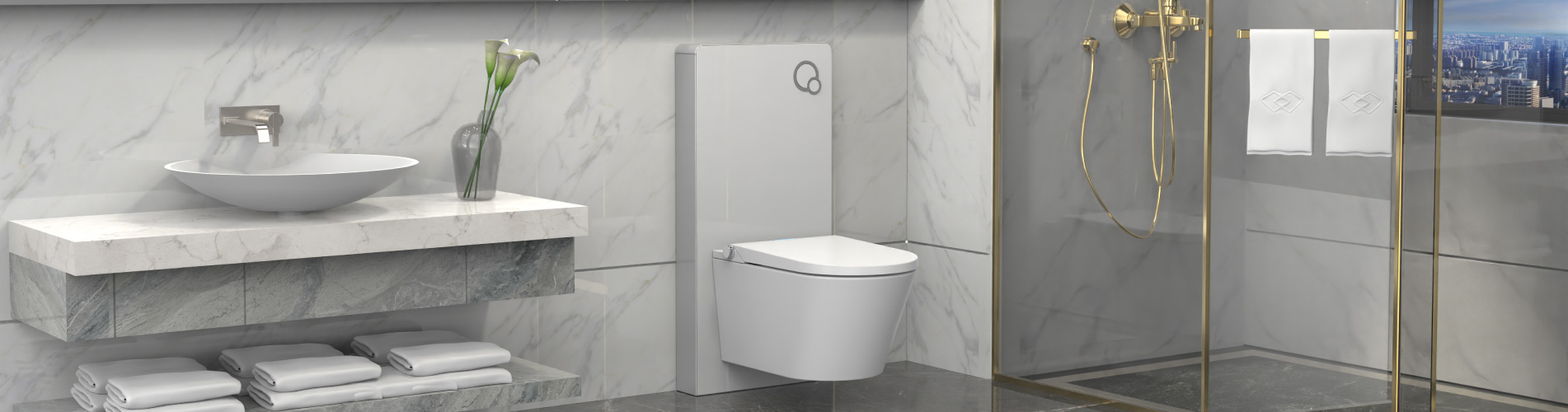
Exporting smart toilets to Europe requires more than a single certificate—it demands a complete compliance framework covering electrical safety, water hygiene, and environmental regulations. The seven core certifications include CE marking (LVD/EMC), EN 1717 backflow prevention, EN 997 performance standards, RoHS/REACH material safety, WEEE electronic waste compliance, and the upcoming EU Drinking Water Directive (DWD) requirements effective 2027.
Why European Certification Standards Are Among the World's Strictest
Europe classifies smart toilets as "wet‑zone electrical appliances," subjecting them to a unique triple‑layer regulatory framework that combines electrical safety, potable water hygiene, and circular economy principles. Unlike markets where a single safety mark suffices, the EU requires OEM manufacturers to demonstrate compliance across multiple directives simultaneously.
According to the European Commission's market surveillance data, non‑compliance with the Low Voltage Directive (2014/35/EU) and the Drinking Water Directive (2020/2184) represents the two leading causes of smart sanitary ware import rejections at EU borders. For B2B buyers and engineering contractors, certification completeness directly determines supplier eligibility for public procurement and commercial project tenders.
At Oceanwell, our decade of specialized OEM experience in intelligent bathroom
The 7 Mandatory Certification Categories for Smart Toilet OEMs
The following framework represents the non‑negotiable compliance architecture for any smart toilet (electronic bidet seat or integrated smart WC) destined for the European Economic Area (EEA).
1. Electrical Safety & Electromagnetic Compatibility (CE Marking)
CE marking is the fundamental passport for market access. For smart toilets, it encompasses two parallel directives:
LVD (2014/35/EU) — Low Voltage Directive: Governs insulation performance of high‑voltage internal components such as instant heating modules and seat warming elements. IPX4 minimum ingress protection is mandatory for bathroom installation environments. Oceanwell's current product line maintains IPX4+ ratings across all electronic control units.
EMC (2014/30/EU) — Electromagnetic Compatibility: Ensures the smart toilet's control systems do not emit electromagnetic interference that could disrupt nearby IoT devices, Wi‑Fi routers, or medical equipment. This is increasingly critical as European bathrooms integrate more smart home ecosystems.
Pro tip for OEM buyers: Verify that your supplier's CE certificate specifically lists "electronic bidet seat" or "smart water closet" under the product description. Generic CE certificates for "household appliances" may not cover the wet‑environment testing protocols required for sanitary ware.
solutions has shown that understanding—and exceeding—these regulatory benchmarks is the only sustainable pathway into Europe's mid‑to‑high‑end market segments.
2. Water Safety & Backflow Prevention (EN 1717)
EN 1717 is arguably the most underestimated standard by non‑European manufacturers—and the most frequent cause of project‑level compliance failures. This standard mandates physical air gaps or approved check valves to prevent contaminated water from siphoning back into the potable water supply during pressure drops.
3. Sanitary Performance & Dimensional Standards (EN 997)
EN 997 defines the mechanical performance benchmarks for WC pans and flushing systems, including:
Flush volume efficiency (dual‑flush 3/6L or 3/4.5L configurations)
Waste extraction performance under standardized test loads
Geometric compatibility with European wall‑drainage and floor‑drainage conventions
For OEM partners, compliance with EN 997 enables products to fit most European residential and commercial installations, minimising expensive on‑site modifications.
4. Hazardous Substance Restrictions (RoHS & REACH)
RoHS (2011/65/EU) and REACH (EC 1907/2006) regulate the chemical composition of all materials in contact with users or water:
RoHS limits lead, cadmium, mercury, and hexavalent chromium in electronic components and circuit boards.
REACH restricts phthalates, bisphenol‑A derivatives, and SVHCs (Substances of Very High Concern) in plastic housings, elastomer seals, and nozzle materials.
5. Electronic Waste & Circular Economy (WEEE Directive)
The WEEE Directive (2012/19/EU) establishes Extended Producer Responsibility (EPR) for the collection, treatment, and recycling of electronic waste. As of 2026, the European Parliament is finalizing a revised WEEE framework that introduces:
Mandatory recycling quotas for Critical Raw Materials (CRMs) found in printed circuit boards and heating elements
Ecodesign requirements prioritizing disassembly and component recovery
Digital Product Passport (DPP) integration for traceability
6. Drinking Water Material Safety (BWGL — UBA Germany)
The German Federal Environment Agency (Umweltbundesamt, UBA) operates the most widely recognized assessment scheme for materials in contact with drinking water: the BWGL (Bewertungsgrundlage). Although technically a German national standard, BWGL certification is accepted as the de facto gold standard across the EU by major distributors and engineering specifiers.
Oceanwell holds active BWGL certification for all polymer and elastomer components in our smart toilet water pathways. This certification confirms that no harmful chemicals—including microplastics, softeners, or heavy metal leachates—migrate into the water stream at detectable levels.
7. EU Drinking Water Directive (DWD 2020/2184) — Effective 2027
The revised EU Drinking Water Directive (2020/2184) establishes harmonised material‑safety rules for products in contact with drinking‑water across EU member states. The EU Positive List for drinking‑water materials becomes legally binding from 31 December 2026, with a six‑year transition period; full mandatory enforcement takes effect on 1 January 2033.
Products holding valid national‑level drinking‑water approvals obtained before 31 December 2026 retain legal market access throughout the full transition window.
Oceanwell is undergoing formal DWD certification with a notified body. For our OEM partners, this proactive preparation mitigates supply‑chain disruption risks ahead of the final mandatory deadline, while our portfolio with existing valid national certifications remains legally sellable during the transition phase.
Frequently Asked Questions (FAQ)
Q1: Is CE marking alone sufficient for exporting smart toilets to Europe?
No. CE marking under the LVD and EMC directives is the legal minimum for EU market entry, but it does not demonstrate compliance with water safety or material hygiene standards. For B2B procurement and engineering projects, buyers almost universally require EN 1717 certification to satisfy local water authority inspections. Oceanwell provides a complete Technical Construction File (TCF) and Declaration of Conformity (DoC) package for every OEM shipment to support downstream compliance verification.
Q2: What changes for smart toilet exports to the UK after Brexit?
The United Kingdom no longer recognizes CE marking as sufficient for products placed on the Great Britain market (England, Scotland, Wales). The UKCA (UK Conformity Assessed) mark is now required for electrical and plumbing products. Northern Ireland maintains special arrangements under the Windsor Framework. Oceanwell has updated all compliance documentation to include dual CE+UKCA certification pathways, ensuring seamless market access across all UK jurisdictions.
Q3: What is the difference between BWGL and DWD certification?
BWGL (Bewertungsgrundlage) is Germany's national assessment basis for drinking water contact materials, administered by the UBA. It is currently the most stringent and widely accepted material safety benchmark in Europe. The EU Drinking Water Directive (DWD 2020/2184) is a pan‑European regulation that will harmonize material acceptance criteria across all 27 member states by 2027 through a unified European Positive List. BWGL compliance today provides immediate market access; DWD compliance will become mandatory from 2027 onward. Oceanwell holds active BWGL certification and is actively pursuing DWD listing to ensure uninterrupted compliance through the regulatory transition.
Q4: Which IP rating is required for smart toilets installed in European bathrooms?
IPX4 is the minimum ingress protection rating required for electronic components in bathroom Zone 2 and Zone 3 installations under IEC 60529. This rating certifies resistance to water splashing from any direction. For integrated smart toilets with exposed nozzles and control panels, Oceanwell recommends IPX4+ construction with sealed PCB enclosures and conformal coating on critical circuits to ensure long‑term reliability in high‑humidity environments.
Your Next Steps: Secure European Market Access with Oceanwell
Within European markets, compliance documentation is far more than administrative formalities — it underpins brand credibility and commercial market viability. Missing certifications or outdated test reports may lead to customs holds, product recalls, or permanent removal from established distributor networks.
Beyond reliable OEM manufacturing capacity, Oceanwell delivers integrated regulatory support for your European go‑to‑market:
- End‑to‑end compliance framework: Regulatory oversight spanning raw‑material qualification through complete Technical File compilation
- Dual‑market compliance pathways: Parallel CE and UKCA certification support for EU & Great Britain territories
- Forward‑looking regulatory preparation: Proactive pre‑compliance work for DWD (2020/2184), WEEE 2026 updates and ESPR obligations
- Fully transparent documentation: Accessible Declarations of Conformity, full test reports and material declarations for your OEM brand audits


 No. 33 Shishan North Road, Dongfu Street, Dongfu Town, Haicang Dist., Xiamen,Fujian, China
 +86 13605038522
 +86-592-5685085 ext.8010
 sales08@oceanwellxm.com
 +86 13605038522
 IPv6-Netzwerk unterstützt